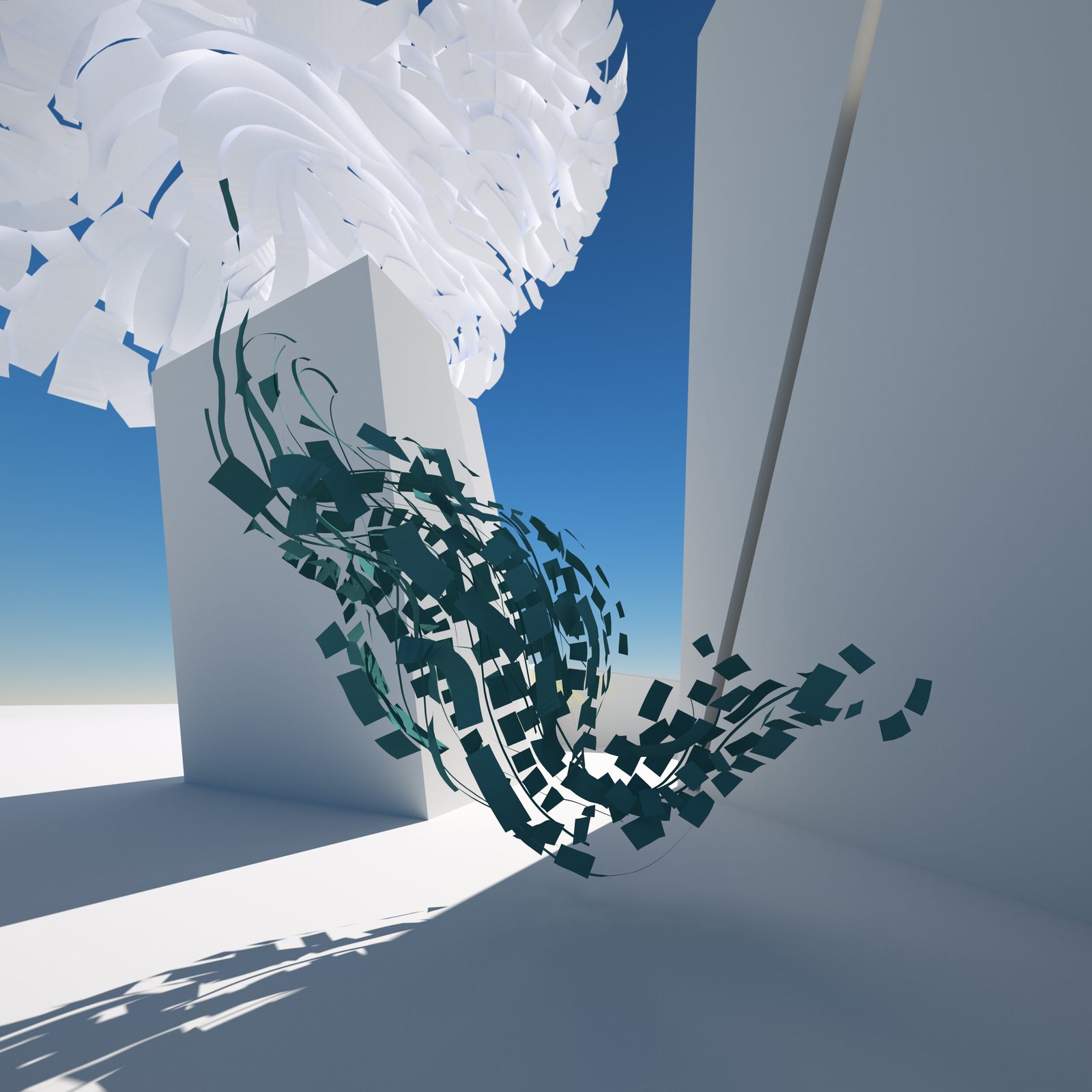
Born from a hackathon in New York City, CULTVRAL was one of the first platforms for spatially curating VR art shows, and the project that launched Samuel’s decade-long practice in virtual architecture.
Née d’un hackathon à New York, CULTVRAL fut l’une des premières plateformes de commissariat spatial d’expositions d’art VR, et le projet qui a inauguré la pratique de Samuel en architecture virtuelle, aujourd’hui longue d’une décennie.
In the summer of 2016, after graduating from university, Samuel moved to New York City for a position at an architectural VR software company. Almost immediately, he joined Art-A-Hack, a multi-week art hackathon that paired artists with technologists. The goal of the team’s project was to develop a platform enabling artists and galleries to spatially curate and manage VR art shows, with the long-term ambition of expanding to augmented reality once the hardware was ready.
À l’été 2016, au sortir de l’université, Samuel s’installe à New York pour occuper un poste dans une entreprise de logiciels de VR destinés à l’architecture. Presque aussitôt, il se joint à Art-A-Hack, un hackathon artistique de plusieurs semaines qui jumelait des artistes à des technologues. Le projet de l’équipe visait à développer une plateforme permettant aux artistes et aux galeries de commissarier et de gérer, dans l’espace, des expositions d’art VR, avec l’ambition à long terme de s’étendre à la réalité augmentée dès que le matériel le permettrait.
Through the hackathon, the team created a proof-of-concept website to host and manage 3D models and a 3D interface in AltspaceVR that let them choose from uploaded models to place in the metaverse. After the hackathon, Samuel brought the project to AltspaceVR and continued developing it with a programmer, handling user interface, project management, gallery design, artist outreach, and organizing VR art shows.
Au fil du hackathon, l’équipe a créé un site web de validation de concept pour héberger et gérer des modèles 3D, ainsi qu’une interface 3D dans AltspaceVR permettant de choisir parmi les modèles téléversés pour les disposer dans le métavers. Après le hackathon, Samuel a porté le projet vers AltspaceVR et en a poursuivi le développement avec un programmeur, prenant en charge l’interface utilisateur, la gestion de projet, la conception de la galerie, le démarchage auprès des artistes et l’organisation des expositions d’art VR.

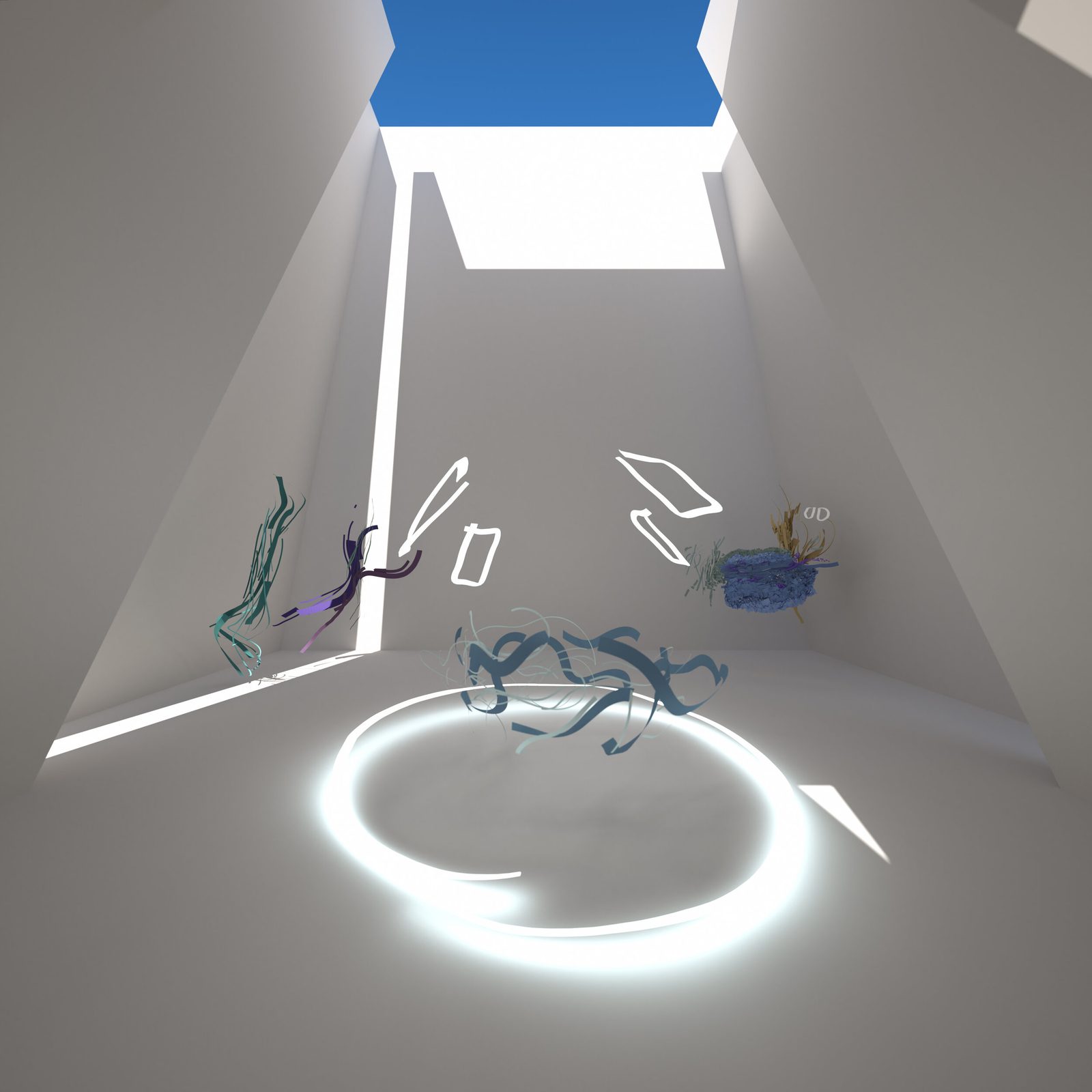
The gallery was designed in Autodesk Revit and the VR art was sculpted using Tilt Brush. Even in this earliest project, the architectural impulse was clear: the gallery was a space designed to produce specific qualities of light and atmosphere.
La galerie a été conçue dans Autodesk Revit et les œuvres VR ont été sculptées avec Tilt Brush. Dès ce tout premier projet, l’impulsion architecturale était manifeste : la galerie était un espace conçu pour produire des qualités précises de lumière et d’atmosphère.
White walls, rectangular skylights, and strip lighting created a minimalist architecture where daylight became the primary material, casting dramatic diagonal beams that shifted as the viewer moved through the space. Each corridor and room produced its own lighting condition, giving every artwork a unique spatial context.
Des murs blancs, des puits de lumière rectangulaires et un éclairage linéaire composaient une architecture minimaliste où la lumière du jour devenait le matériau premier, projetant de saisissants faisceaux diagonaux qui se déplaçaient à mesure que le visiteur traversait l’espace. Chaque corridor et chaque salle produisait sa propre condition lumineuse, offrant à chaque œuvre un contexte spatial unique.

During the last twenty-four hours before the platform closed, I stayed in the gallery as long as I could, hosting a slew of metaverse visitors who were gathering for the supposed final days of AltspaceVR.
Durant les vingt-quatre dernières heures avant la fermeture de la plateforme, je suis resté dans la galerie aussi longtemps que je le pouvais, accueillant une foule de visiteurs du métavers venus se rassembler pour ce que l’on croyait être les derniers jours d’AltspaceVR.

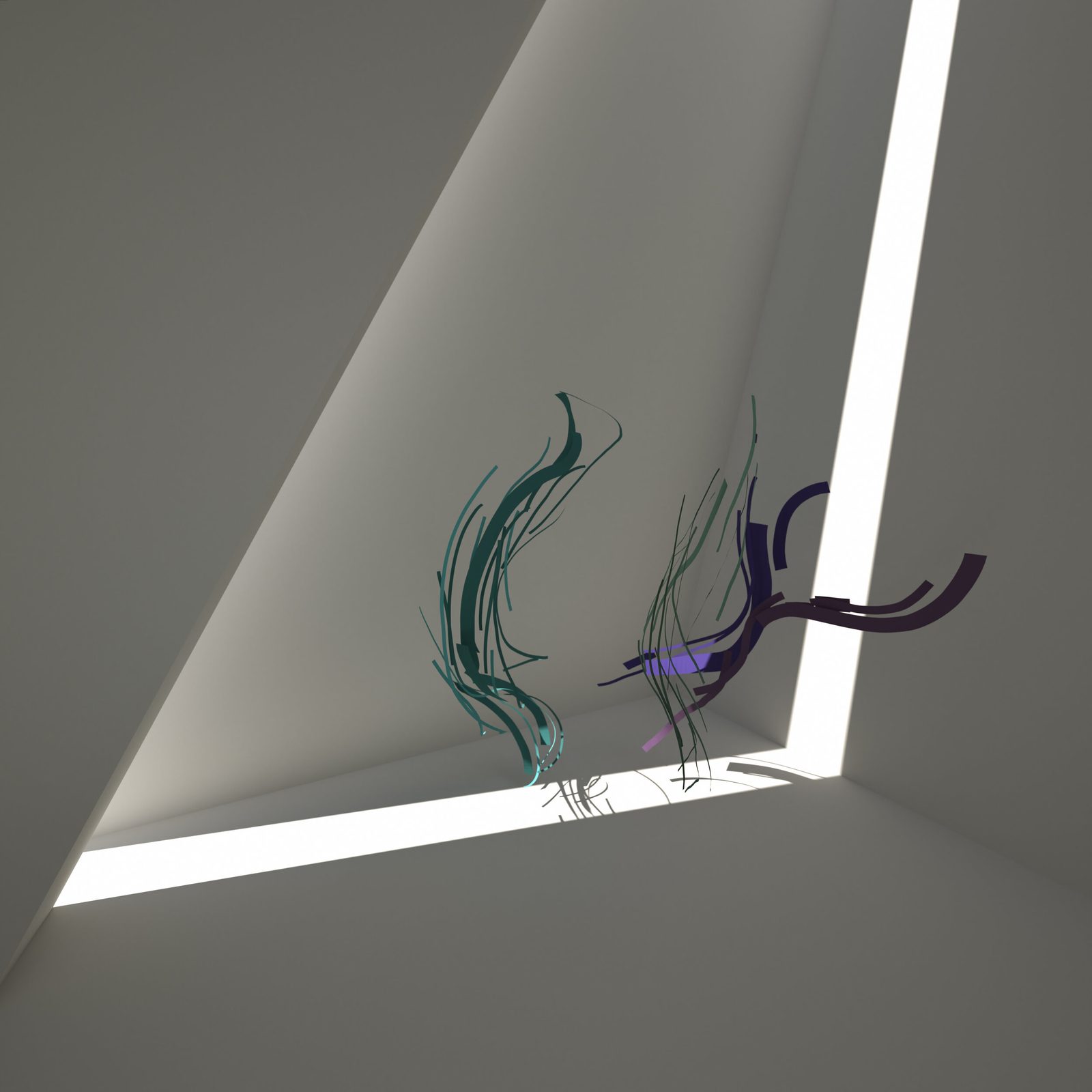
After roughly one year of development, AltspaceVR announced that it would be abruptly shutting down. Coincidentally, Samuel was visiting his father in Gaspésie at the time. During the platform’s final twenty-four hours, he stayed in the gallery as long as he could, hosting waves of metaverse visitors who gathered in the virtual space for what they believed were its last days. That week was the first and final time the gallery was shown to a large online public.
Après environ un an de développement, AltspaceVR a annoncé sa fermeture soudaine. Par coïncidence, Samuel rendait alors visite à son père en Gaspésie. Durant les vingt-quatre dernières heures de la plateforme, il est resté dans la galerie aussi longtemps qu’il le pouvait, accueillant des vagues de visiteurs du métavers rassemblés dans l’espace virtuel pour ce qu’ils croyaient en être les derniers jours. Cette semaine-là fut la première et la dernière fois que la galerie fut présentée à un vaste public en ligne.
AltspaceVR was eventually acquired by Microsoft and continued operating after some interruptions. But the experience of building and losing a virtual space crystallized something fundamental: the architecture of virtual worlds matters, and the communities that form within them are real. The loss of a digital space is felt as genuinely as the loss of a physical one.
AltspaceVR a finalement été acquise par Microsoft et a poursuivi ses activités après quelques interruptions. Mais l’expérience de bâtir puis de perdre un espace virtuel a cristallisé quelque chose de fondamental : l’architecture des mondes virtuels compte, et les communautés qui s’y forment sont bien réelles. La perte d’un espace numérique se ressent aussi véritablement que celle d’un espace physique.


CULTVRAL was the seed from which every subsequent project grew. The experience of designing VR galleries led directly to the Museum of Other Realities commission, where Samuel would design the architecture for one of the first permanent virtual art museums. The lighting obsession born in these white corridors, the conviction that architecture should serve light, would define every project that followed.
CULTVRAL fut la graine dont est né chaque projet subséquent. L’expérience de la conception de galeries VR a mené directement à la commande du Museum of Other Realities, où Samuel allait concevoir l’architecture de l’un des premiers musées d’art virtuel permanents. L’obsession de la lumière née dans ces corridors blancs, la conviction que l’architecture doit servir la lumière, allait définir chacun des projets qui ont suivi.
In 2020, additional VR art pieces were added to the environment and the lighting was recalculated, a quiet update to a space that, despite its early origins, still holds the architectural DNA of everything that followed.
En 2020, de nouvelles œuvres VR ont été ajoutées à l’environnement et l’éclairage a été recalculé : une mise à jour discrète d’un espace qui, malgré ses origines lointaines, porte encore l’ADN architectural de tout ce qui a suivi.